


News Details
-
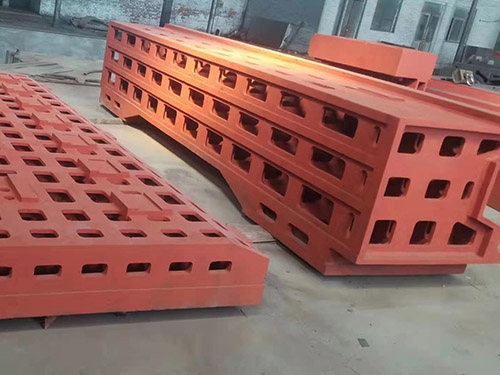
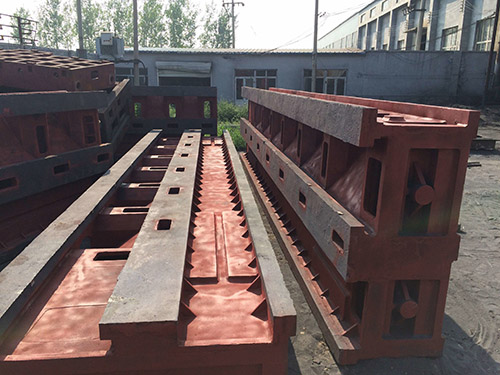
Cast iron platform/flat plate series
-
Machine Tool Casting Series
-
3D Flexible Welding Platform Series
-
Granite and Marble Series
-
Ground rail groove rail series
-
Cast iron bending plate series
-
Square Box and Square Tube Series
-
Machine tool pad iron series
-
V-shaped frame series
-
Square ruler series
-
Skewner series
-
Magnesium aluminum alloy series
-
3D Platform Fixture Series
-
Ring gauge series
Analysis of Causes and Preventive Measures for Production Defects in Cast Iron Platforms
Date: 2020-05-22 22:56:10 Views: 116
What are the causes of production defects in cast iron platforms?
Answer: Technological and metallurgical factors mainly include cooling rate, overheating treatment and inoculation treatment of molten iron, characteristics of furnace materials, etc
The impact of cooling rate
Cast iron platform cast iron is a material that is highly sensitive to cooling rate. The thick and thin walls of the same casting may have significantly different microstructures inside and outside, commonly known as structural inhomogeneity. Because the graphitization process largely depends on the cooling rate. There are many factors that affect the cooling speed of cast iron platform castings, such as casting wall thickness and weight, type of mold material, sprue and riser, and weight. Due to the fact that the wall thickness, weight, and structure of castings depend on working conditions and cannot be changed arbitrarily, their impact on the microstructure should be considered when selecting chemical compositions.
The impact of iron liquid incubation treatment
Incubation treatment is the process of adding an inoculant to the molten iron before it enters the casting cavity of a cast iron platform to change its metallurgical state, thereby altering the microstructure and properties of the cast iron. For gray cast iron, inoculation treatment is carried out to obtain the microstructure of A-type graphite, pearlite matrix, and fine eutectic clusters, as well as to reduce the tendency of white casting at the thin walls or corners of the casting and the sensitivity to the casting wall thickness; For malleable cast iron, it is to shorten the annealing cycle, increase the allowable wall thickness and microstructure of the casting; For ductile iron, it is to reduce the tendency of white casting in cast iron platform castings, improve the spheroidization rate and the roundness of graphite.
The Impact of Overheating Treatment on Liquid Iron
Raising the overheating temperature of molten iron can:
① Increase the carbon content of chemical compounds and correspondingly reduce the carbon content of graphite
② Refine graphite and promote the formation of dendritic graphite
③ The "heritability" of cast iron
④ Improve the uniformity of microstructure on the cross-section of cast iron platform castings
⑤ Beneficial for the shrinkage of castings. Similarly, the insulation of molten iron also has a similar effect on the overheating of molten iron.
Grey cast iron cannot be heat treated to meet the grade requirements
Generally speaking, heat treatment can greatly improve the microstructure and properties of cast alloys, but under gray cast iron conditions, the effect of heat treatment is relatively small. In gray cast iron, graphite has a significant impact on its properties, and any heat treatment method cannot change the morphology and distribution of graphite. Therefore, heat treatment cannot be used to improve the properties of gray cast iron to meet the requirements of the grade.
However, there are many methods to improve the mechanical properties of gray cast iron, such as rational selection of chemical composition, changing the composition of furnace materials, overheating treatment of molten iron, inoculation treatment, trace or low alloying, etc., all of which can achieve good results.
Precautions for producing high-grade cast iron platforms (impregnated cast iron)
When producing high-grade cast iron platforms (generally referring to HT200 and above), in order to obtain high mechanical properties, the amount and length of graphite should be minimized as much as possible. The traditional method is to reduce the carbon and silicon content of the molten iron and increase the condensation rate of the molten iron. However, when the amplitude is slightly larger, D-type undercooled graphite and white cast iron will appear, which will actually reduce the mechanical properties of gray cast iron.
Adding an appropriate amount of ferroalloy particles, mainly composed of ferrosilicon, before the furnace or pouring into the molten iron is called inoculation treatment. The incubation process provides a large amount of nucleation particles for graphite to nucleate in molten iron. Nurturing the precipitation of graphite, thereby whitening, refining flake graphite, and transforming undercooled graphite into non directional uniformly distributed graphite (A-type graphite), not only greatly improves the comprehensive mechanical properties, but also enhances the uniformity of the as cast structure, reducing the mechanical property differences caused by uneven wall thickness, different cooling rates at corners and cores of castings. Therefore, the inoculation treatment of molten iron is a technology for producing high-grade gray cast iron (inoculated cast iron).
The role of manganese in high-grade gray cast iron (cast iron) is not only to neutralize the influence of sulfur, but also to enable the gray cast iron to have a pearlite structure. Therefore, the manganese content in high-grade gray cast iron (cast iron) is generally higher. Sulfur can weaken the graphitization effect of inoculants, so sulfur is often limited to below 0.12%. In recent years, some people believe that in order to achieve good fertility, the sulfur content of the original iron solution cannot be too low. Therefore, in the case where the sulfur content in the molten iron gradually decreases in the future, how to determine the sulfur content in the inoculated cast iron seems to be a noteworthy issue.
The phosphorus content is generally limited to below 0.15% based on the requirements of mechanical properties, but for some machine tool gray cast iron parts (often made of cast iron), the phosphorus content can be increased to around 0.3% to 0.5% or higher.
Four prohibitions when using inoculants for inoculation treatment of cast iron platforms
The inoculants used for gray cast iron can be classified according to their function, main elements, shape, etc. There are four taboos when using inoculants for gray cast iron inoculation treatment:
Firstly, the inoculant should be dried before use.
Secondly, the use of pure silicon or pure ferrosilicon as inoculants is prohibited
Thirdly, the addition of fertility agents should not be hasty, and the method should be carefully considered.
Four rules, particle size of inoculant
Possible defects in gray cast iron parts
In the production of cast iron platforms, common casting defects include porosity, poor composition and performance, hot cracking and cold cracking, shrinkage and porosity, slag holes and iron beans, insufficient cold insulation and pouring, sand holes and sand inclusions, succulents and misalignment, deformation, etc. Usually, the reasons for these defects are not only related to molding and core making issues, but sometimes also to many production processes such as melting and pouring, sand mixing quality, and sand removal. Therefore, a specific analysis is conducted in order to take corresponding and reasonable measures to solve them.
How to distinguish between porosity and shrinkage in cast iron platform casting production?
In the casting production of cast iron platforms, the porosity and shrinkage of castings are sometimes associated and sometimes independently clustered. When porosity and shrinkage occur, we determine whether the defect is porosity or shrinkage to solve the problem. To determine these two types of defects, it is important to first understand their characteristics. Today, we will teach you how to identify porosity and shrinkage defects in cast iron platforms by understanding their characteristics.
What are the methods for preventing and controlling stomatal defects?
In the production of cast iron platform casting, hole type defects are common defects and also one of the defects that cause significant losses to the foundry. Pore type defects are divided into pores and shrinkage cavities. Pores are often caused by the invasion, entrapment, or entrainment of gases in the molten metal.
The location of porosity in cast iron platform castings varies, and the reasons for its occurrence are also different. This requires our casting technicians to master the principles and characteristics of various types of porosity when determining the cause of porosity defects. Only in this way can we prescribe the right medicine and solve the existing porosity defects.
Next, let's take a look at the pore characteristics generated by different reasons:
(1) Entrained pores: Metal liquid forms pores in the casting during the filling process due to the entrapment of gas, often in the form of isolated circular or elliptical large pores with irregular positions, generally located in the upper middle of the casting.
(2) Invasion pores: Pores generated by the mold, core, coating, core support, and cold iron invade the surface of the casting to form pores, which are often pear shaped or elliptical in shape, large in size, smooth in pore walls, and often have an oxidized color on the surface.
(3) Reactive pores: Pores formed by chemical reactions between certain components inside the molten metal or at the interface between the molten metal and the mold or core, resulting in clustered distribution. The needle shaped or waist shaped reaction pores located on the surface of the casting are called surface needle pores and subcutaneous pores, which are formed by the interface reaction between the molten metal and the mold or core coating; Needle reaction pores scattered or clustered throughout the entire cross-section or a specific local area of cast iron platform castings.
formation cause
(1) Due to the moisture, rust, oil stains, and humid climate of the furnace material, the melting tools and ladle have not been dried, the composition of the molten metal is improper, and the alloy liquid is not refined enough, resulting in a large amount of gas or gas substances in the molten metal, leading to the precipitation of pores or reaction pores in the castings.
(2) Insufficient drying of the mold and core, poor air permeability, excessive moisture and gas generating substances, coating not dried or containing too much gas generating components, rust spots, oil stains or not dried on the cold iron and core support, poor exhaust of the metal mold, and the formation of intrusion pores in the casting.
(3) The pouring system is unreasonable, the pouring and filling speed is too fast, and the metal mold has poor exhaust, which causes the metal liquid to generate turbulence, eddies, or flow interruption during the pouring and filling process, leading to the entrapment of gas and the formation of entrapment porosity in the casting.
(4) The alloy liquid is prone to gas absorption, and the refining, protection, and purification measures not taken by the cast iron platform during the melting and pouring process result in a large amount of gas, slag inclusion, and gas inclusion components in the metal liquid, forming precipitation pores and reaction pores during the filling and solidification process.
(5) Improper preparation of molding sand, core, and coating can cause interface reactions with molten metal, resulting in surface pinholes and subcutaneous pores.
(6) The pouring temperature is too low, the temperature of the metal mold is too low, the slag removal of the metal liquid is poor, and the viscosity is too high, which makes it difficult for the gases involved in the pouring and filling process and the gases precipitated from the metal liquid to be discharged from the mold or float up to the riser or outlet in time.
(7) When melting alloys that are prone to gas absorption during humid seasons, the alloy liquid absorbs a large amount of gas, causing batches of castings to be scrapped.
(8) Excessive addition of resin and curing agent in resin sand, high fluorine content in resin, high angular coefficient and fine particle size of raw sand and sand, high burning loss and micro powder content, resulting in high gas generation and low air permeability of molding sand
Preventive measures
(1) When melting non-ferrous alloys, the furnace charge, solvent, tools, and ladle should be fully preheated and dried to remove rust and oil stains. The amount of furnace charge added for multiple remelting should be appropriately limited.
(2) To prevent excessive oxidation and gas absorption of molten metal during the melting process, deoxidation, degassing, and slag removal should be carried out. A solvent should be added to the surface of the molten metal pool inside the ladle to prevent secondary oxidation, gas absorption, and impurities from returning to the molten pool. When deoxidizing cast steel and cast iron with aluminum, the residual aluminum content should be strictly controlled. For steel liquids with severe suction tendency, aluminum deoxidization should be avoided as much as possible. AVD, VOD, porous plug blowing inert gas, powder spraying method, etc. can be used to refine the steel liquid outside the furnace to remove gases and impurities from the steel liquid; For ductile iron, desulfurization should be strengthened to reduce the flow rate of the original soup. Under the premise of spheroidization, the amount of spheroidizing agent added should be minimized as much as possible to reduce the residual magnesium content of the cast iron, and the inoculation treatment should be strengthened.
(3) During pouring, the metal liquid must not stop flowing, and the filling speed should not be too high. The pouring position and pouring system of the casting should be set to smoothly fill the mold cavity with the metal liquid and facilitate the smooth discharge of gas in the opening cavity.
(4) During casting, the mold and core should be vented, and an exhaust channel should be opened inside the sand core. When fitting, the gap between the core heads should be filled to prevent the metal liquid from drilling into and blocking the exhaust channel.
(5) Increase the height of the sprue to improve the hydrostatic pressure of the filling metal.
(6) Reduce the amount of resin and curing agent added to resin sand, use low nitrogen or nitrogen free resin and raw sand with round shape, moderate particle size, low ignition loss and micro powder content to reduce the gas generation of resin and improve the permeability of resin sand.
Shrinkage defects and prevention methods
There are many reasons for shrinkage and looseness in castings, including casting and pattern design, inappropriate sand box design, sprue and riser design, sand mold displacement avoidance, manufacturing, improper metal chemical composition mixing, improper melting process operation, and pouring.
 Recommended Products
 CONTACT
—— Hotline:15733755098
—— Email:826899931@qq.com
—— Whatsapp:0317-8335666
—— Address:Xinhua Street, Jiaohe Town, Botou City