


News Details
-
Cast iron platform/flat plate series
-
Machine Tool Casting Series
-
3D Flexible Welding Platform Series
-
Granite and Marble Series
-
Ground rail groove rail series
-
Cast iron bending plate series
-
Square Box and Square Tube Series
-
Machine tool pad iron series
-
V-shaped frame series
-
Square ruler series
-
Skewner series
-
Magnesium aluminum alloy series
-
3D Platform Fixture Series
-
Ring gauge series
Process flow of high-precision cast iron grinding platform for grinding flat plates
Date: 2020-09-27 14:36:21 Views: 169
Nickname: Grinding Flat Plate Grinding Platform Cast Iron Grinding Scraping Flat Plate Scraping Flat Plate Grinding Scraping Platform Cast Iron Scraping Flat Plate Cast Iron Scraping Platform
In grinding processing, there is a form of sanding on a flat plate embedded with diamond abrasive. In this form, a grinding tool is the main tool, which is called a sand embedded grinding plate Grinding plates have uniform organization, dense structure, no defects such as sand holes, pores, and looseness Easy to sand, evenly distributed and abundant sand particles, firmly embedded and cut The surface is smooth, shiny, and sky blue in color,
Grinding platform features: 1. Simple operation, fast sanding, sufficient sand embedding, easy to apply the same type of sand even after use. After polishing, the smoothness is significantly improved 2. It is easy to measure the required high smoothness and adhesion of the block, and the workpiece mirror surface is shiny green

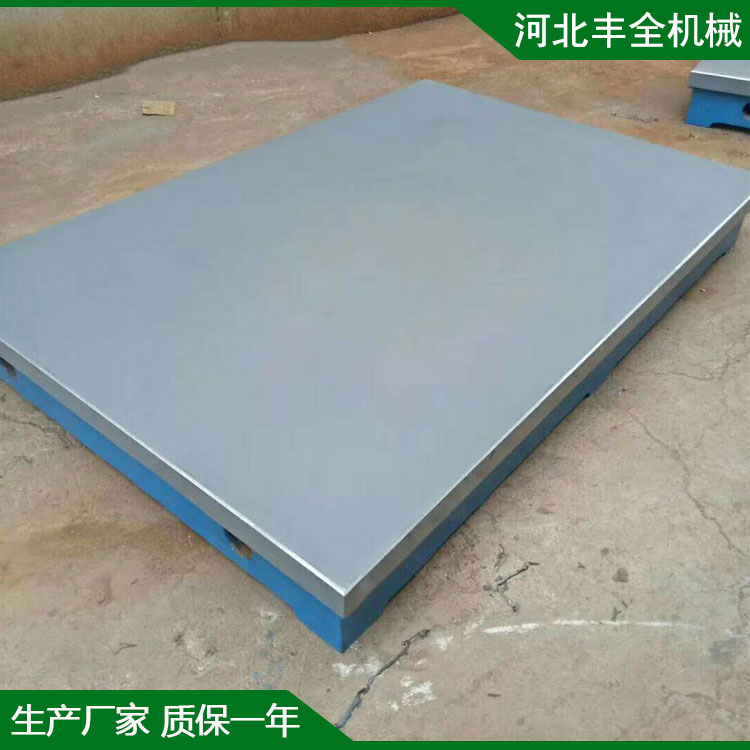
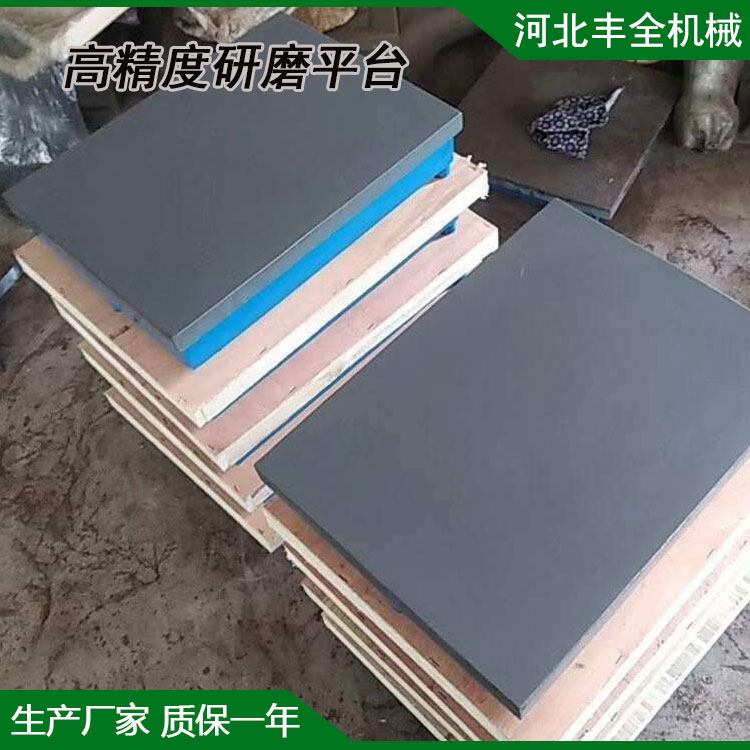
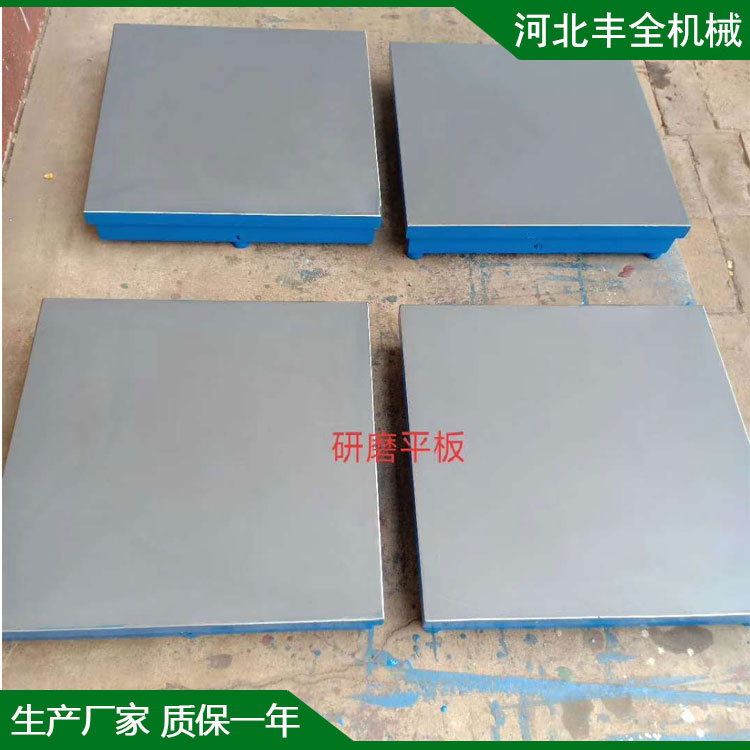
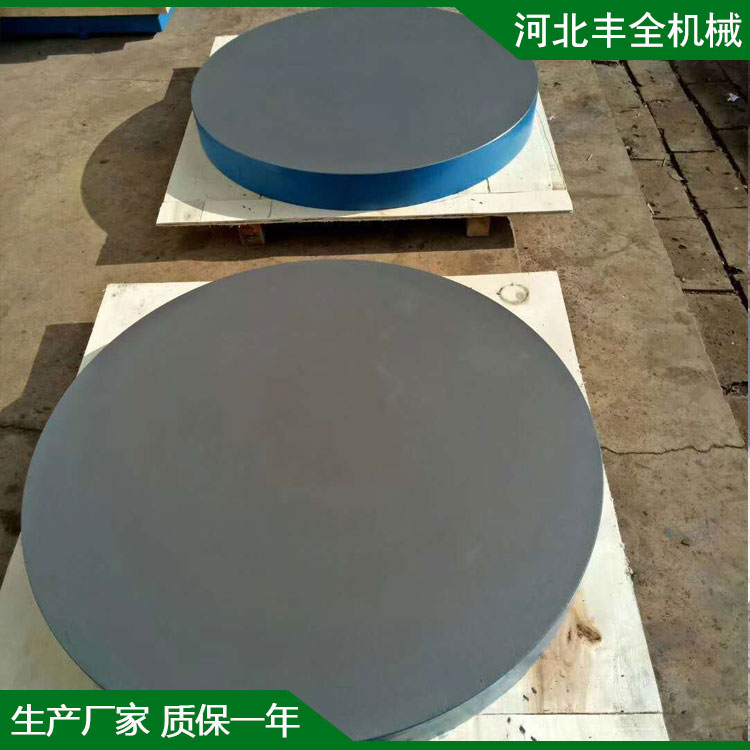
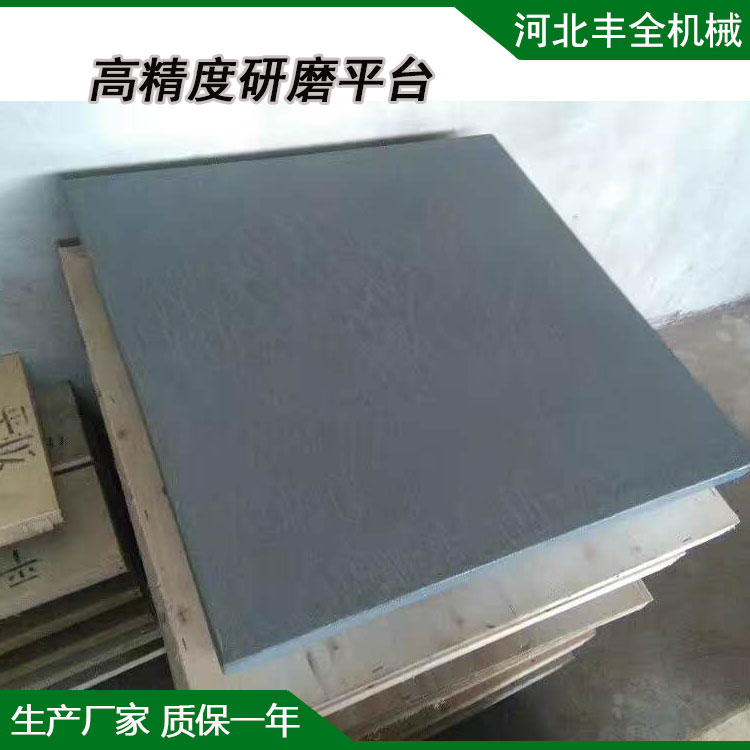

Usage: Manufacturing and repair of measuring tools, grinding of parts, production of mechanical components, and processing of optical instruments.
Specification: 100 * 200 200*200. 250*250. 300*300. 400*400500*800
Specification (length x width) mm
accuracy class
Level 1
Level 2
Level 3
Flatness tolerance (um)
200×200
ten
twenty
fifty
300×200
twelve
twenty-four
sixty
300×300
twelve
twenty-four
sixty
300×400
twelve
twenty-four
sixty
400×400
twelve
twenty-four
sixty
400×600
fourteen
twenty-eight
seventy
500×500
fourteen
twenty-eight
seventy
500×600
fourteen
twenty-eight
seventy
500×800
sixteen
thirty-two
eighty
Grinding method
One method is the three plate mutual grinding method, which refers to the sequential mutual grinding of three flat plates, and each cast iron flat plate is used as the lower plate twice, with a total of 6 times of grinding in practice. The result of grinding and sanding with this method is that the flatness of the three flat plates is very good, and the sanding effect of the three flat plates is basically the same. All three flat plates can be used without frequent sanding. Another method is the mutual grinding method of two plates, also known as the mother plate pressing method. This method only uses two cast iron flat plates to grind each other up and down. The result of grinding and sanding using this method is that the flatness of the two flat plates is basically consistent, with the flatness of the upper plate being concave and the flatness of the lower plate being convex, and the sanding effect of the lower plate is better than that of the upper plate. Due to the concave middle of the upper plate, it is not easy to repair the measuring block. Generally, the upper plate is not needed, only the lower plate is used as a flat plate. Therefore, the current grinding and sand pressing processes for grinding flat plates and sand pressing flat plates mostly use the three plate mutual grinding method.
Method for obtaining qualified ground cast iron plates
Cast iron flat plate is a manual grinding tool used in the repair of measuring blocks. Generally, gray ductile iron material (HT200) is selected, with a hardness of about HB180 and a fine surface. It is not allowed to have pores or sand holes, and is tempered to achieve uniform hardness and consistent metallographic structure. Cast iron flat plates, whether old or new, need to be regularly leveled to maintain the correct flatness. The flatness of the repaired measuring blocks meets the requirements; At the same time, timely and correct sanding should be carried out to maintain good cutting force and accuracy, so that the surface of the repaired measuring block has good flatness and smoothness. The leveling of the surface of the cast iron flat plate adopts the "three piece grinding method". The method is to roughly inspect the flatness of each cast iron flat plate with a knife edge ruler before grinding, and distinguish the different sizes of bumps and depressions. First, mark the three cast iron plates separately to prevent any mistakes during grinding. Then take two cast iron plates with larger differences and mix them with coarse sand for mutual grinding (the optional types of coarse sand are: W20, W14, W10, W7, W5, W2.5). The order of mutual grinding is generally 2/1, 3/1, 3/2, 1/2, 1/3, 2/3,. In the above operation process, it is required that the grinding time be equal each time. After rotating back and forth for 4 turns, remove the cast iron flat plate, wipe off the black grease, check the flatness and accuracy of the cast iron flat plate. When the flatness accuracy error is very small, wash away the coarse sand and add fine sand for grinding until the flatness requirement of △ 12 level or above is reached. Due to the same material, when sand is added for grinding, the surfaces of the two cast iron plates wear out simultaneously, and the unevenness matches; When comparing the third block with the first middle block, their respective defects were identified. Three pieces are rotated for research, and the unevenness becomes smaller as it is worn. In this way, the three pieces rotate with each other, alternating up and down, grinding multiple times, gradually achieving the required plane accuracy. The flatness of the cast iron flat plate that has been ground and leveled must be verified, usually using a 0-level knife edge ruler and the light transmission method. Before inspection, wipe the cast iron flat plate clean to prevent any adhesion between the blade of the cutting edge ruler and the cast iron flat plate. Carefully inspect the surface of the cast iron flat plate for any excessive light transmission. The surface of the cast iron flat plate used for repairing measuring blocks should be slightly convex, generally not exceeding+0.003mm per square meter. If it is not convex, a 60 watt incandescent bulb can be used as a square frame to heat the cast iron flat plate on top before use, in order to achieve the effect of slightly convex surface of the cast iron flat plate. For grinding and leveling cast iron plates, sand pressing is required. The purpose of sand pressing is to firmly embed sand particles into the surface of a cast iron flat plate, giving the cast iron flat plate the cutting ability. The grinding method for sand pressing on cast iron plates is the same as that for leveling cast iron plates, which uses the "three piece grinding method". The main materials and tools that should be possessed are aviation gasoline, kerosene, stearic acid, and steel grit. The ratio of sandblasting abrasive is generally 100-120 milliliters of gasoline, 20 grams of diamond sand, and 2 grams of stearic acid. Before sanding, clean the grinding plate thoroughly. Prepare the diamond abrasive in advance and let it sit for at least 8 hours. When using, shake the abrasive evenly and spread it evenly on the cast iron plate. After the gasoline on the surface evaporates, drop the kerosene on the surface of the cast iron plate. Use the "three piece grinding method" to perform an 8-shaped swing grinding, so that the abrasive is evenly distributed and pressed into the entire surface of the cast iron plate. When the gasoline in the abrasive is almost completely dry, the plates will adsorb to each other with great attraction. At this time, it is the time to press in sand particles. Remove the upper cast iron plate and dry the surface of the cast iron plate with degreasing cotton. The cast iron flat plate after sand pressing is the cutting tool for grinding the measuring block. Choose a flat piece, lightly polish it with an oilstone, and use it as the finishing polishing for measuring block repair, while the other two pieces are used for rough grinding. After sanding the cast iron flat plate, the inspection method is to lightly grind a waste block on the surface of the cast iron flat plate a few times. If the cutting force is high, there is resistance to the hand feel, and there is a rustling sound, a white metal cutting layer will be left on the cast iron flat plate, and a layer will be evenly ground off on the test block, leaving clear and uniform sand cutting marks. In this way, a qualified cast iron grinding plate and sand pressing plate were obtained.
Precautions
In grinding processing, there is a form of sanding on a flat plate embedded with diamond abrasive. In this form, the grinding tool is the main tool, and the grinding tool is called the embedded sand grinding flat plate. Grinding plates have uniform organization, dense structure, no defects such as sand holes, pores, and looseness Easy to sand, evenly distributed and abundant sand particles, firmly embedded and cut The surface is smooth, shiny, and sky blue in color

 Recommended Products
 CONTACT
—— Hotline:15733755098
—— Email:826899931@qq.com
—— Whatsapp:0317-8335666
—— Address:Xinhua Street, Jiaohe Town, Botou City